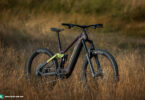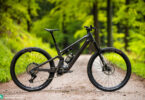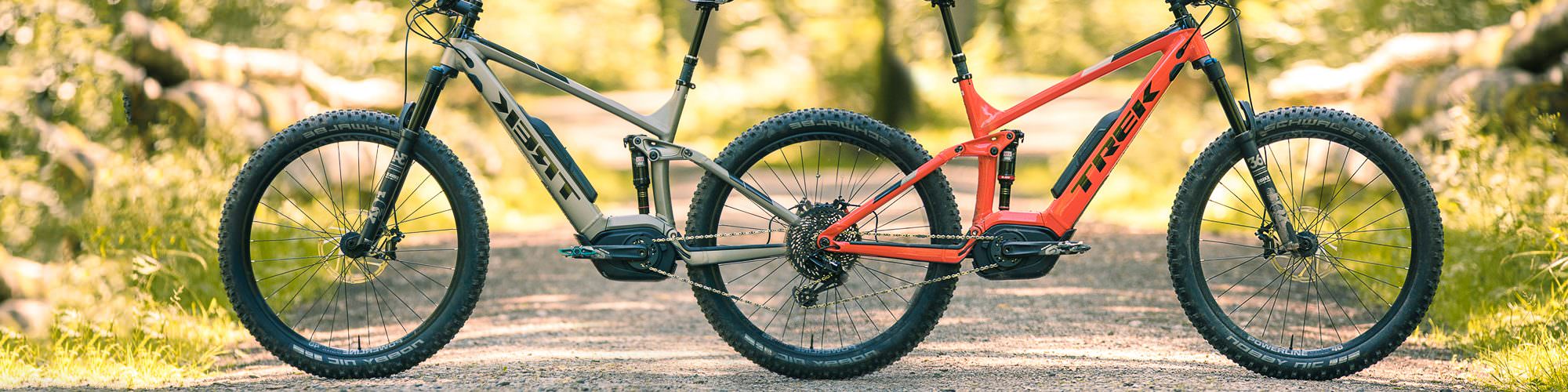
You can’t overhaul a modern classic, so not much has changed on Trek’s Powerfly for the coming season. They’ve retained the two models – the FS and the LT – which look almost identical at first glance, bar the variation in their travel. In fact, they’re so similar that it’s hard to work out which bike to buy. Fortunately, you won’t have to scratch your head for too long, as we’ve got the answer!
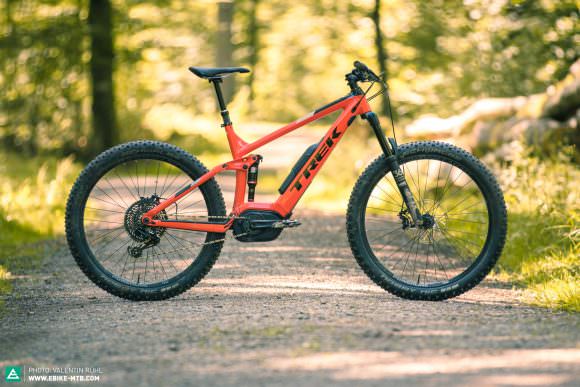
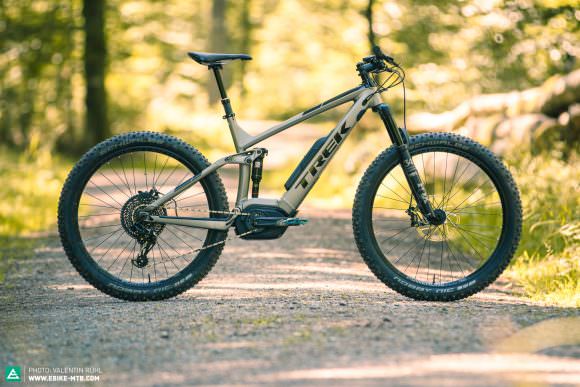
With just minor updates since the current 2017 model, the 2018 Trek Powerfly models roll up with the most significant change being the improved integration of the Bosch PowerPack battery into the downtube. This is not only visually much more stylish, it also lowers the bike’s’ centre of gravity. The rest of the frame design has been retained, but that’s no bad thing; last year’s model comfortably met our approval.
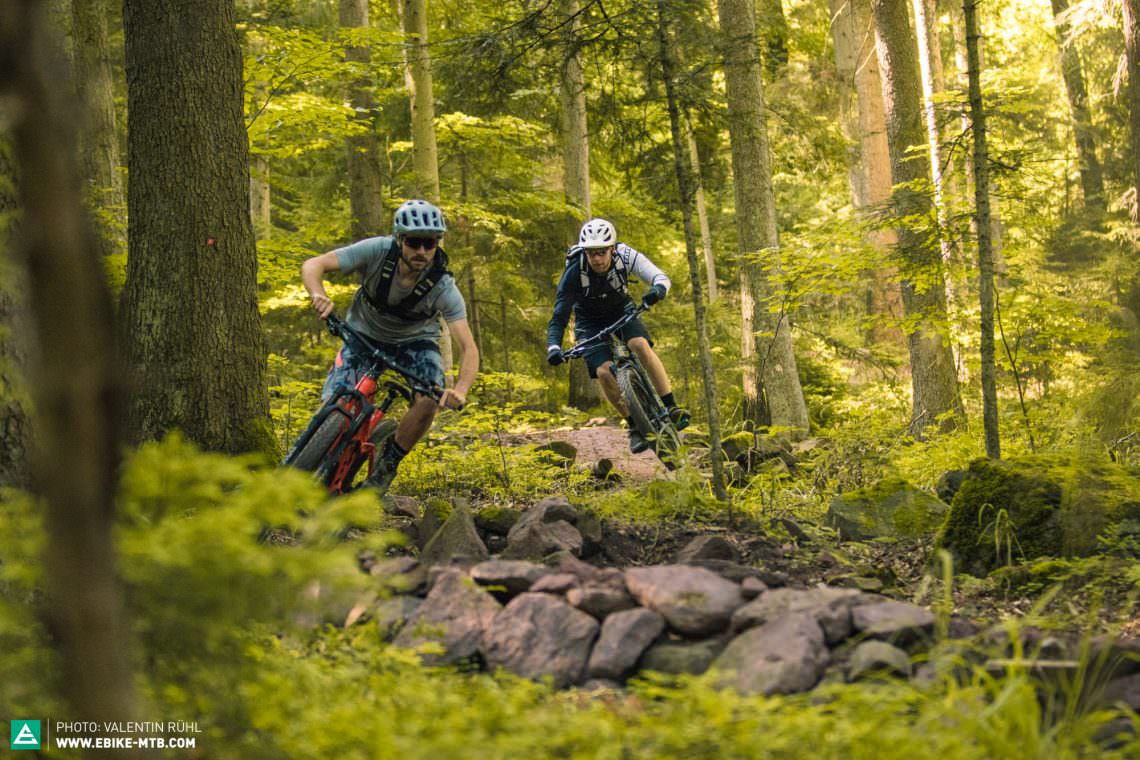
The Trek Powerfly 9 FS and the Powerfly 9 LT in detail
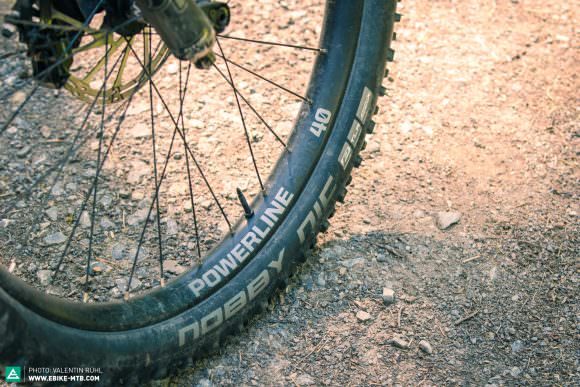
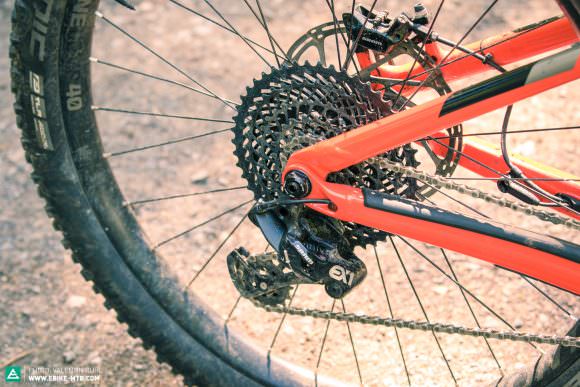
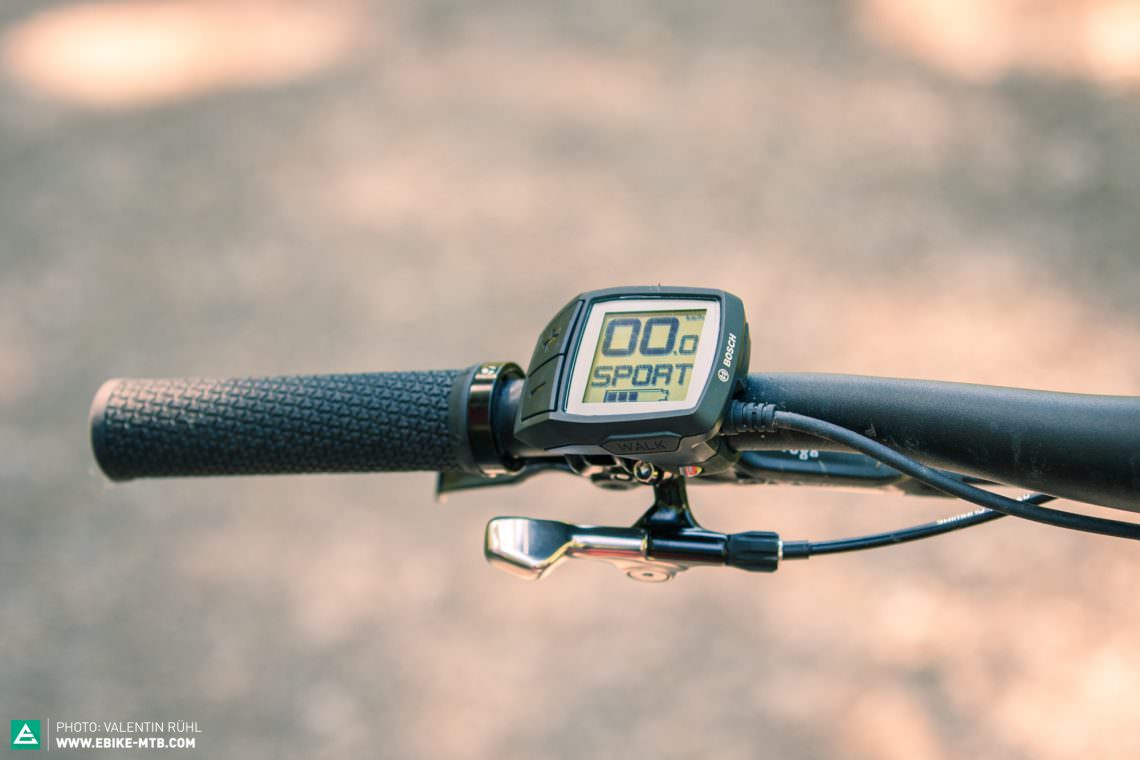
Both top-of-the-line models have welcome updates to their spec, seeing them adopt the Bontrager Powerline Comp 40 wheels, which have been specifically developed for E-MTBs. The rims are reputed to be significantly stronger, while SRAM’s EX1 drivetrain und Guide RE brakes are an equally well-curated choice, as is the Bosch Purion display. Entry-level buyers will be stoked to hear that from now on Trek have standardised the choice of a 500 Wh battery across the whole lineup.
Trek Powerfly 9 LT
150 mm/150 mm
Fork FOX 36 FLOAT Performance
Rear shock RockShox Deluxe RT3
Motor/Battery Bosch Performance CX/500 Wh
Brakes SRAM Guide RE
Drivetrain SRAM EX1
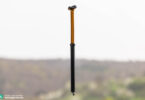
Seatpost Bontrager Drop Line
Stem Bontrager Line
Handle Bontrager Alloy 750 mm
Tires Schwalbe Nobby Nic Performance
Wheels Bontrager Powerline Comp 40
Price € 5,999
Trek Powerfly 9 FS
130 mm/130 mm
Fork FOX 34 FLOAT Performance
Rear shock RockShox Deluxe RT3
Motor/Battery Bosch Performance CX/500 Wh
Brakes SRAM Guide RE
Drivetrain SRAM EX1
Seatpost Bontrager Drop Line
Stem Bontrager Line
Handle Bontrager Alloy 750 mm
Tires Schwalbe Nobby Nic Performance
Wheels Bontrager Powerline Comp 40
Price € 5,999
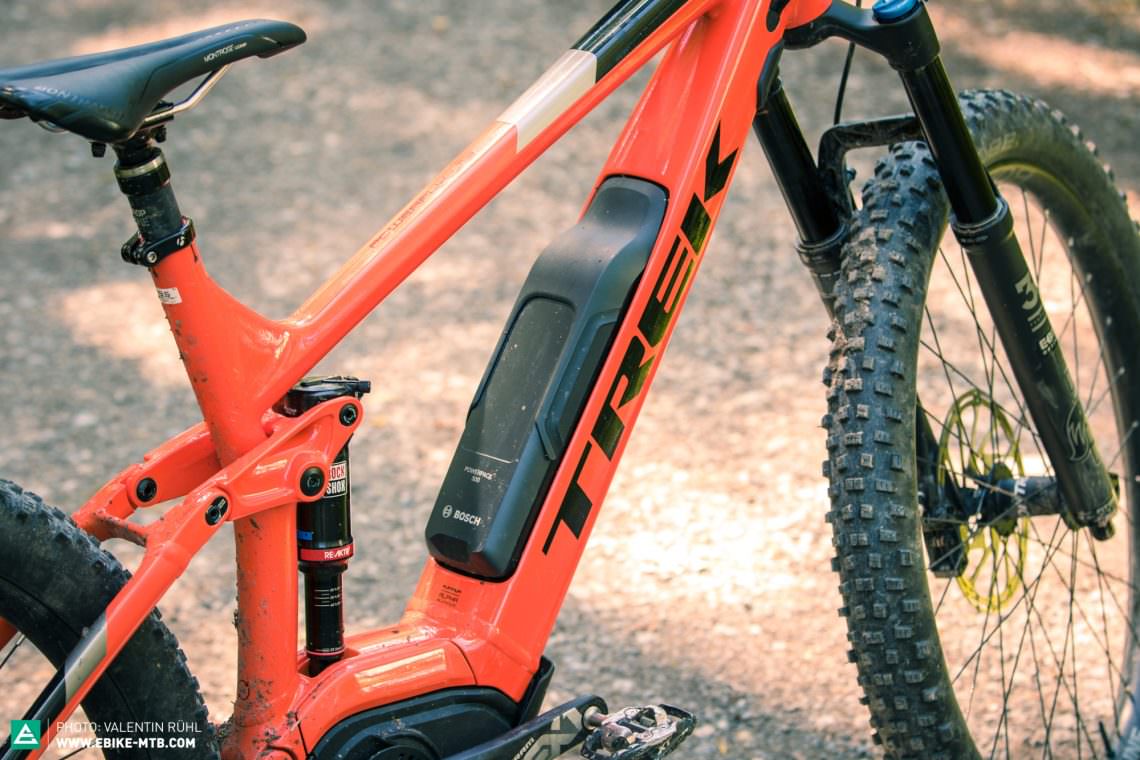
The Powerfly 9 LT and the Powerfly 9 FS have the same frame and the exact same spec – excluding one key part: the suspension. The LT’s rear shock has a longer stroke, teasing out 150 mm of travel from the rear end while the FS makes do with 130 mm. Trek have therefore chosen a FOX 34 FLOAT with 130 mm of suspension up front on the FS, while the LT takes the longer-travel FOX 36 FLOAT with 150 mm. It’s good to see that more travel doesn’t equate to more pennies as both bikes retail for € 5,999.
Both have the exact same spec – excluding one key part: the suspension.
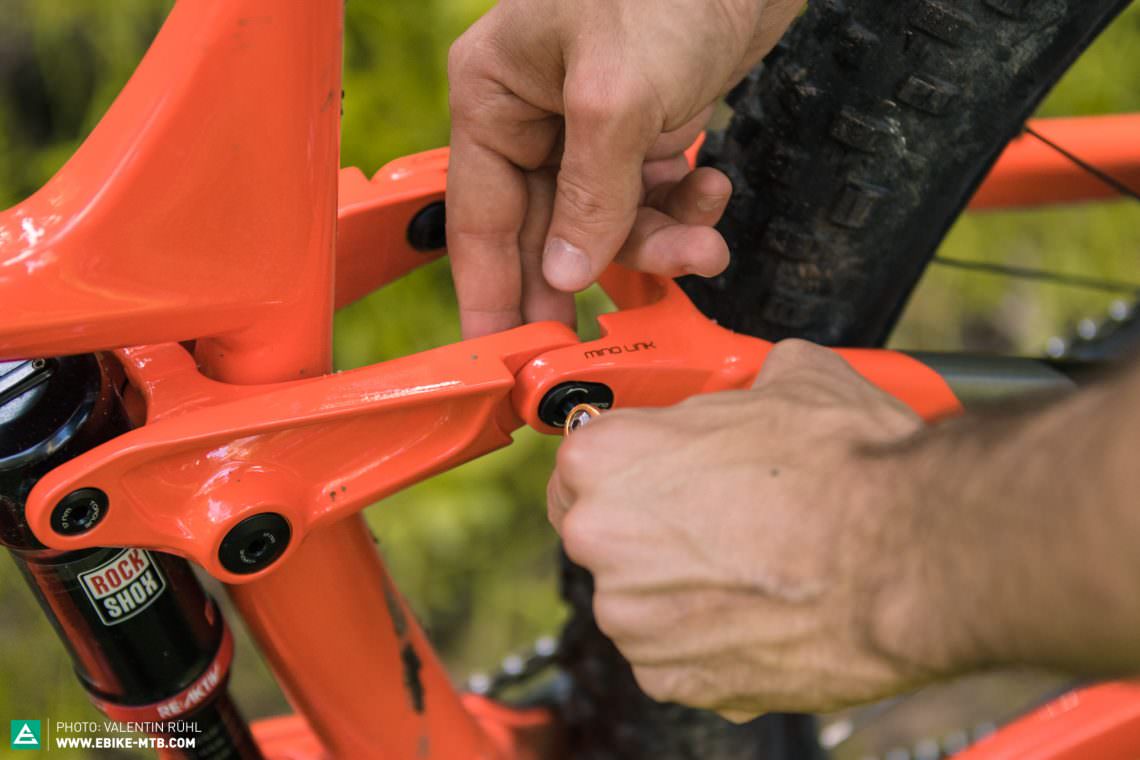
With on-the-fly geometry adjustment, both frames are built with the Mino Link flip chip that adjusts the head angle and seat angle by half a degree. The longer fork on the Powerfly LT gives it a 1° slacker head angle than the FS. The unweighted bottom bracket height is 8 mm higher, but once sag is at 30% there’s only 2 mm height increase left. On paper, there’s little difference between the bikes; the LT’s reach is a touch shorter, and its stack is a little higher. These nominal differences lead to a noticeably more upright and comfortable position than on the FS. Fortunately, the extra 220 g isn’t felt on the trail.
The Trek Powerfly 9 FS and the Powerfly 9 LT on the trail
Before tackling the burning question of which Powerfly for which rider, we headed out to test both bikes exhaustively. They’re both built around the powerful Bosch CX motor, which complements the long 475 mm chainstays to turn both Powerflys into stellar climbers. The steeper head angle on the FS lends a little more pressure over the front wheel, but the LT is still able to comfortably keep the rubber side down at all times. When the gradient really ramps up, the FS marginally outshines the LT, but it’s only a negligible victory. The FS’s riding position is slightly more stretched out, hinting at more of a performance-oriented aspect. The two Powerflys both have really low front ends, so you’d easily be able to slot some spacers under the stem if you prefer a more leisurely sort of ride. Even with more suspension in which to wallow, the LT isn’t hampered on the climbs and displays great efficiency despite being a longer-travel bike.
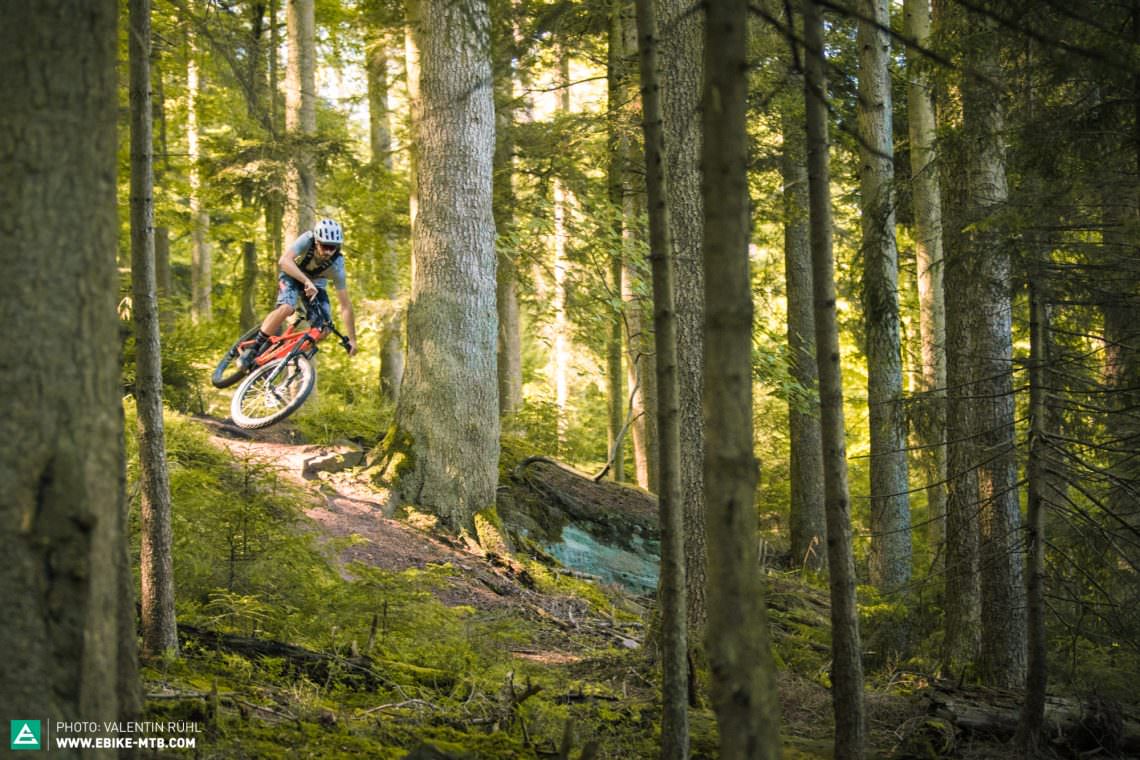
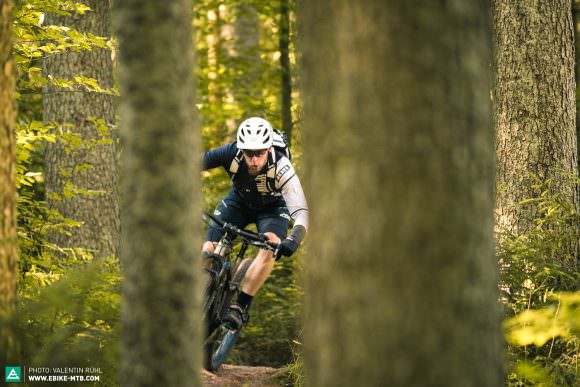
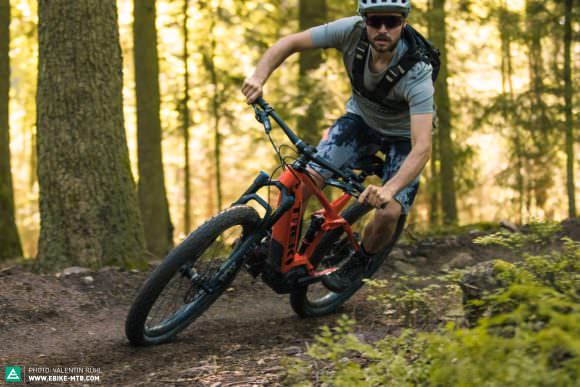
But testing these bikes on gravel fire roads is a serious understatement of their capabilities, so we let off the leash on the trails. With both bikes tuned in the low setting, we threaded our way down the trail, carving round berms to begin with before hitting a more natural section littered with rocks and roots. The Powerflys both displayed really responsive back ends that achieve great traction, sensitive bump absorption, and satisfying predictability. There was superb definition while riding and no shortage of ground feedback; Trek have clearly been working hard.
The Powerfly 9 LT lets rip on flowing corners with berms, letting its slack 66° head angle, long frame, and long chainstays give a masterclass in smoothness. The Trek Powerfly 9 FS is just as composed on the trail, but is a bit more twitchy up front and didn’t really display any notable benefits on tight terrain, even as a shorter-travel bike. The minimally shorter travel is less noticeable at the back than up front.
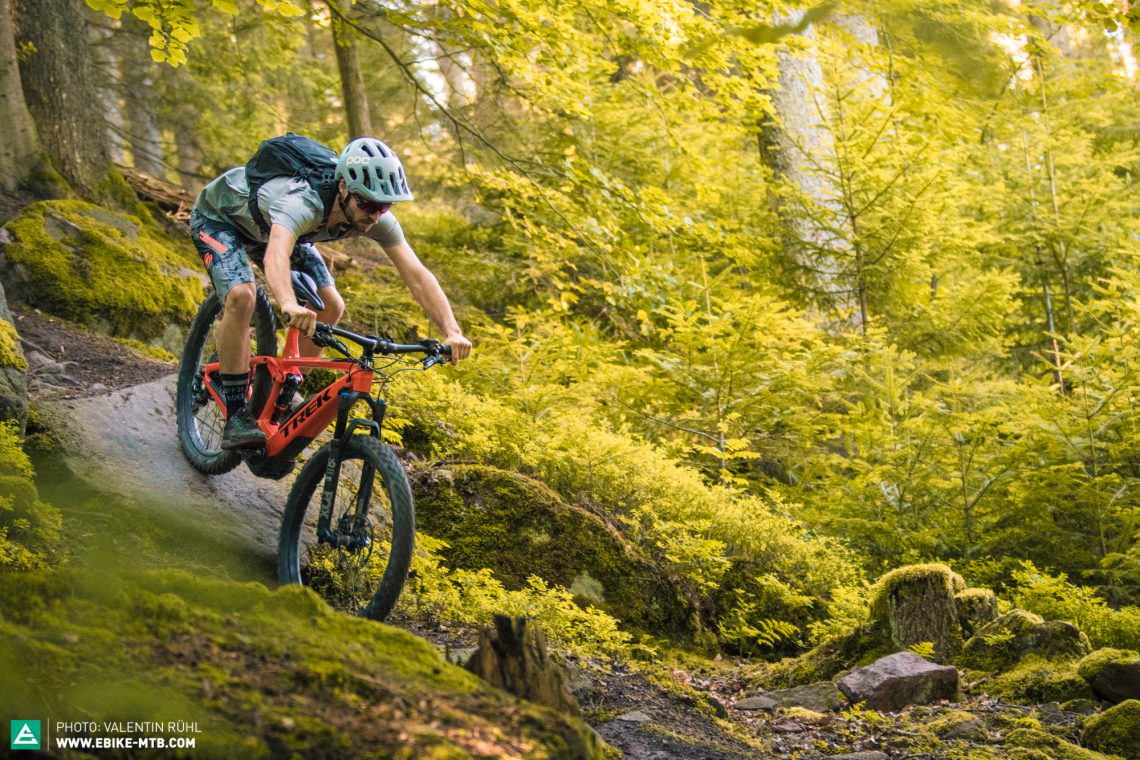
The gnarlier the terrain, the more apparent the differences between the two bikes. The LT is very much a bike that needs a firm hand and will appease experienced riders, seeing its FOX 36 fork lend great, responsive steering and an ability to iron out any size hit. More cautious riders with a tendency to brake more will enjoy the extra suspension – the LT is definitely the more forgiving rig of the two, and its smoothness and predictability lend it real confidence-fuelling characteristics. It’s hard to fault either bike as they’re both ripping models, but our test team came out unanimous: the LT is just a step above the FS.
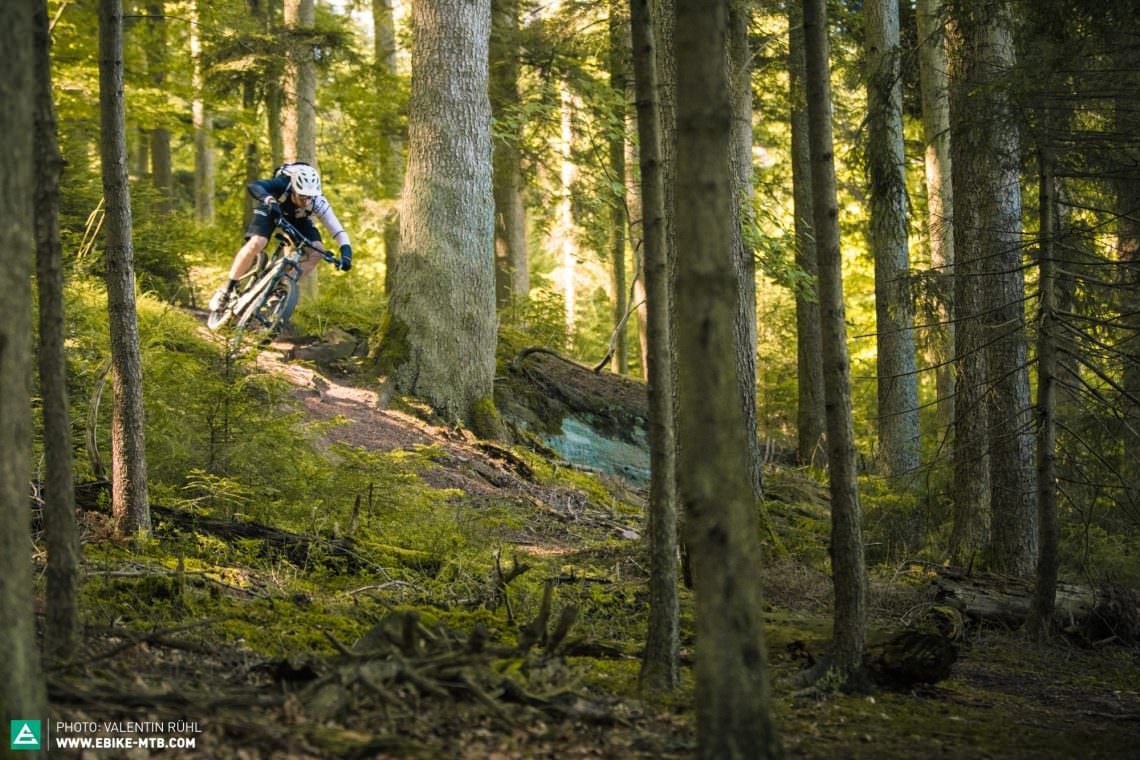
Both bikes climb brilliantly, but the LT takes the crown on descents!
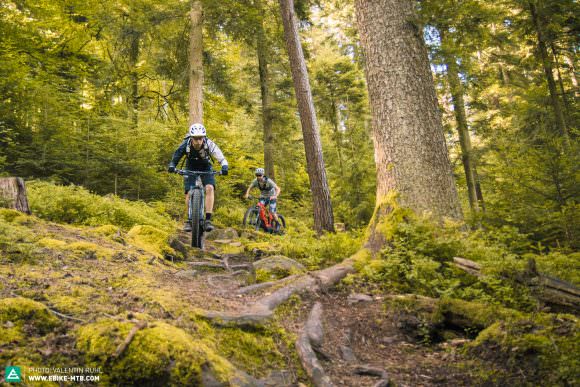

Trek Powerfly 9 FS vs. Powerfly 9 LT – the decision
Arguably an elevated version of what is already a great E-MTB, the new Trek Powerfly will satisfy any buyer – whichever model you go for. Unlike normal purchasing woes, we think there’s a different way to approach this stalemate, and it doesn’t depend on where or how you’ll be riding. Look at the bikes more universally: the Powerfly 9 LT climbs just as well as the shorter-travel FS, but is in a position to offer notably more comfort and plushness on descents. For beginners it’s a forgiving bike to grow into, while for pros it’s a highly competent, thrill-seeking rig. In our eyes, no one would go wrong with the LT.



Did you enjoy this article? If so, we would be stoked if you decide to support us with a monthly contribution. By becoming a supporter of E-MOUNTAINBIKE, you will help secure a sustainable future for high-quality cycling journalism. Click here to learn more.
Words: Photos: Valentin Rühl